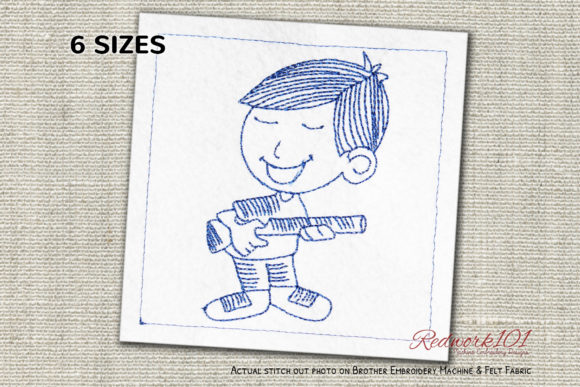
Cute Little Hunter Design Review for Business Merchandise
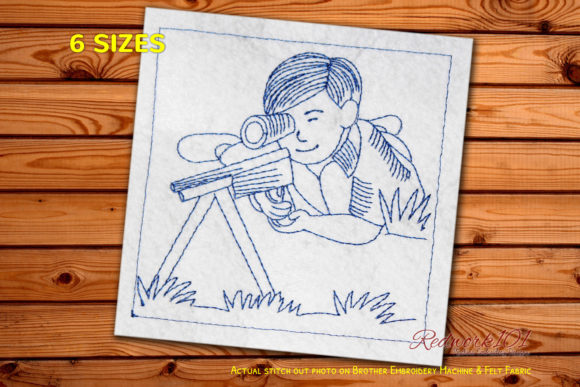
As an embroidery designer who works regularly with small businesses on their branded merchandise, I’ve reviewed countless designs for their commercial potential. Today, I’m evaluating the Cute Little Hunter Design, a Forest-themed Embroidery design, from the perspective of a professional looking to create patches, uniform accents, and product labels. This isn’t just about decoration; it’s about how a design functions as a tool for brand identity.
First Impression: A Friendly, Handmade Brand Accent
The title Cute Little Hunter Design immediately sets a tone. This is not a stern, corporate logo. It evokes a sense of playful, rustic charm, which is perfect for businesses wanting to project a friendly, approachable, and perhaps handmade personality. For a small café, boutique, pet brand, or creative studio, this initial feeling is valuable. The design feels like it could sit comfortably on an apron in a bakery or on the sleeve of a staff shirt in a local florist. The optional box stitch mentioned in the description adds a framing element; remembering that its color can often be skipped directly gives you flexibility to integrate or simplify the design to match your brand colors.
Performance in Real Business Applications
Let’s break down how this machine embroidery design would perform in the real-world scenarios my clients typically need.
Embroidered Patches and Product Labels
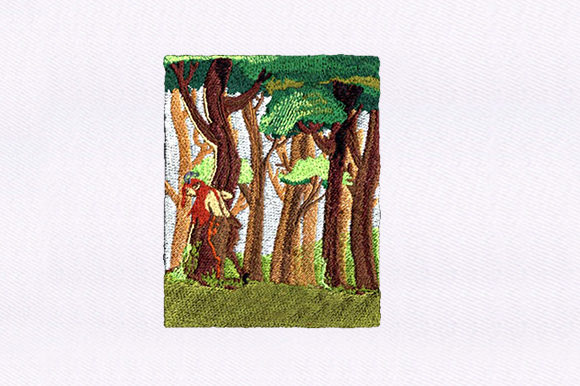
For a custom apparel or handmade product brand, a Cute Little Hunter Design patch can be a powerful branding add-on. Sewn onto a tote bag or pinned to a product as a label, it instantly elevates the item with a tactile, premium feel. The Forest theme lends itself well to outdoorsy brands, pet shops, or eco-conscious studios. As a embroidered patch, its success hinges on clarity at small sizes. Before production, you must test it at the intended patch size to ensure the ‘hunter’ element and any accompanying details remain distinct.
Uniforms, Caps, and Aprons
For staff uniforms, apron embroidery, or cap embroidery, this design serves as a charming accent rather than a primary logo. On a chest or sleeve, it adds personality without overwhelming. On a curved surface like a cap front, stitch density and design scaling become critical. A high stitch count on a small area can lead to stiffness. Always test on real fabric—the actual cap material or apron twill—using the proper stabilizer to see how it behaves.
Tote Bags and Customer Gifts
As a tote bag design or on event merch for a boutique, the design’s cute and playful nature encourages customer engagement. It makes the merchandise feel special and gift-worthy. This directly affects product value and customer trust, as a well-executed embroidery signals care and quality.
Where to Use This Design Carefully
Not every application is ideal. Here are points a business must consider before using this digital embroidery file.
- Small Patch Sizes: If you plan a very small patch (under 2 inches), the details might get lost. Always create a mockup for client approval at that scale first.
- Dark Uniforms: The thread color contrast is paramount. If your staff shirts are dark, the design’s color palette must be chosen to pop. Test in black and white first to evaluate contrast fundamentals.
- Items for Frequent Washing: On work shirts or aprons that undergo heavy laundering, a design with very fine details or tiny lettering might degrade faster. Simpler, bold elements fare better.
- Textured Fabric: On heavily textured fabrics, the design’s outlines may not appear as crisp. This is another reason to test on real fabric before bulk production.
Impact on Brand Identity and Professionalism
Using the Cute Little Hunter Design consistently across your small business merch—from aprons to patches to product packaging accents—builds visual consistency. This repetition aids in brand recognition. For a handmade brand or Etsy seller, the embroidered application itself reinforces a handmade presentation, which can deepen buyer engagement. However, the ‘cute’ aesthetic must align with your overall brand voice. For a high-end floral studio, it might need pairing with more elegant elements; for a playful pet brand, it could be perfect.
Practical Designer Notes for Commercial Use
Before you run this design on your machine for a commercial embroidery project, follow these steps.
- Check Commercial Licensing: Before any business use, confirm the licensing terms of the embroidery file. This is a mandatory step.
- Review Thread Colors & Spacing: Analyze the suggested thread palette. Does it work with your brand colors? Inspect the spacing between elements to ensure it won’t pucker on your chosen fabric.
- Confirm Hoop Size: While specific hoop size isn’t provided here, you must know the required hoop to accommodate your intended application size.
- Create a Printable Mockup: Place the design in a printable mockup of your final product (a cap, tote, shirt). Compare it beside other design assets to ensure visual harmony.
- Test, Test, Test: Run a sample on the exact material you’ll use. Assess the finished product for durability, aesthetics, and washability.
The Cute Little Hunter Design offers a charming foundation for businesses seeking a friendly, rustic brand accent. Its success in projects like embroidered patches, cap embroidery, or tote bag design hinges not just on its visual appeal, but on meticulous pre-production testing and a clear alignment with your brand’s identity. When executed with care, it can become a valuable design asset that enhances your merchandise and strengthens your connection with customers.